
- (08) 6182 4916
- admin@frametec.com.au
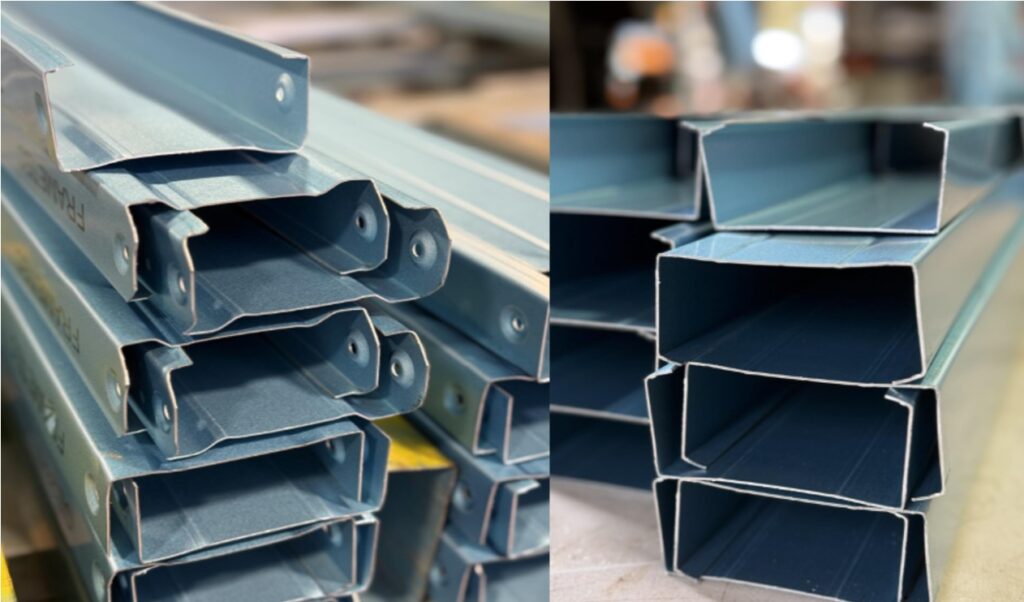
Currently, many engineering companies continue to base their certified engineering documentation on traditional unlipped stud designs, which were the industry standard for decades. Over the past few years, there has been a significant shift in the market. Lipped C-section steel studs have become the dominant profile used in construction due to their superior structural performance.
Despite this industry shift, many engineering firms have not yet updated their methodologies to reflect the structural advantages of lipped profiles. As a result, there is often a gap between the actual products used on-site and the profiles assumed in the engineering documentation.
At Frametec – Australian Engineered Steel Framing , we address this by working closely with external structural engineers who base their certifications and structural calculations on data and performance benchmarks specific to lipped C-section designs. This ensures that our framing systems are not only compliant with NASH and AS/NZS 4600 standards but are also engineered to reflect the true performance capabilities of the materials we manufacture.
This report presents a comparative analysis of cold-formed steel stud sections with and without return lips, highlighting their structural performance, compliance with NASH standards, and practical application benefits.
It serves as an informative resource for clients and partners interested in optimized steel framing solutions.
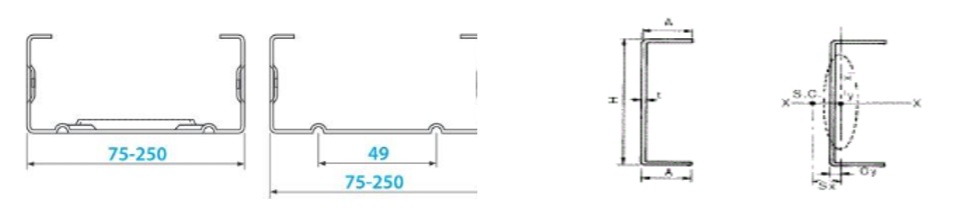
Traditional (Unlipped) Stud:
-Standard C-section without any return folds at the flange edges.
-Simpler design is used primarily in non-structural or minimal-load applications.
Lipped Stud:
-Enhanced C-section with 10–20mm return lips at flange edges.
-Improves section stability and strength.
| Structural Property | Unlipped Stud | Lipped Stud |
| Flexural Strength | Moderate | High |
| Torsional Rigidity | Lower | Enhanced |
| Local Buckling Resistance | Weak | Strong |
| Distortional Buckling | Susceptible | Minimized |
| Lateral Support Requirements | High | Reduced |
| Load Bearing Capacity | Moderate | Increased (25–40%) |
-Axial Capacity Increase: Lipped studs offer up to 37% more axial load capacity than unlipped equivalents.
-Torsional Buckling Resistance: Improved by 30–50% depending on gauge and span.
-Serviceability: Enhanced performance under wind and seismic loads.
| Application Type | Recommended Stud Profile | Reason |
| Non-loadbearing Walls | Unlipped | Cost-effective simplicity |
| Loadbearing Walls | Lipped | High capacity & reduced bracing |
| Long Spans | Lipped | Improved stability |
| External Walls | Lipped | Better performance under wind |
–NASH Standard Part 1 & 2: Recognizes performance distinctions between profile types.
–AS/NZS 4600: Lipped studs qualify for higher effective section properties.
Utilizing lipped steel studs significantly improves structural performance in residential and commercial framing systems. Frametec recommends lipped profiles for all structural applications to enhance safety, longevity, and cost-efficiency.
Get in touch with Frametec for all your engineered steel needs in WA!
Phone: (08) 6182 4916
Whether it’s a query or a quote, pick up the phone & call us today or visit our contact page or send us an email.
Call: (08) 6182 4916 Email: admin@frametec.com.au

© 2023 - Frametec | All rights reserved.